

.
Two national trials confirm link between gut health, vitamin D, phytochemicals & Covid symptoms
.
Trial 1:
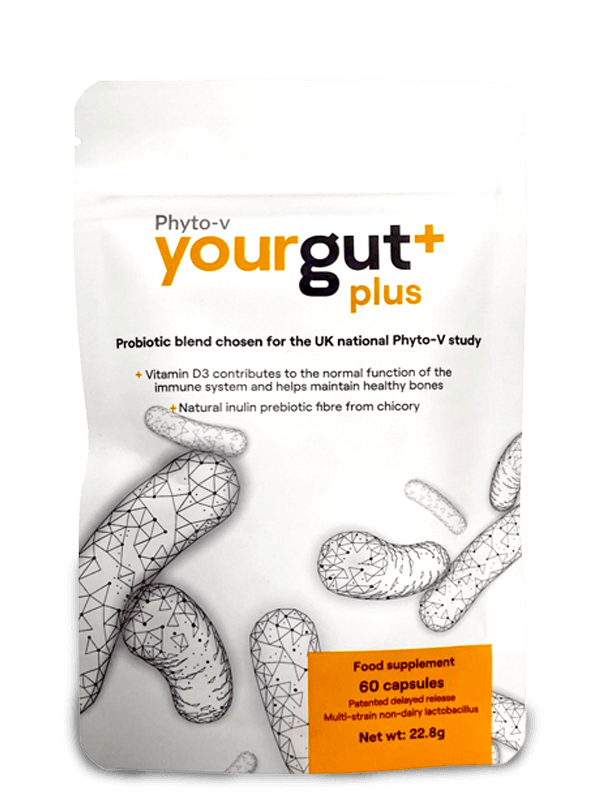
The influence of a blend of probiotic lactobacillus, inulin and vitamin D (Yourgutplus) on the duration and severity of Covid symptoms.

.
Background:
Evidence that link lack of gut microfloral diversity, poor gut health and covid is becoming increasingly apparent. Both are now known to affect the majority individuals suffering with a Covid infection. It is also known that low vitamin D is associated with worse covid symptoms. Gut symptoms t could be caused by the virus itself or the factor that people with poor gut health are more likely to get worse coivid in the first place. Before this study, the influence of strategies to improve gut health and vitamin D levels had not been evaluated and hence the rationale for this study.
Study committee:
R Thomas*, J Aldous+, R Forsyth^, A Chater#, M Williams* (2021). Bedford & Addenbrooke’s Cambridge University NHS Trusts. EudraCT: 2020-001532-10 | IRAS: 282517
 Methods:
From May 2020 to May 2021, 126 participants with Covid were recruited, with an average duration of symptoms of 108 days, who were given 30 days of this pre and probiotic capsule within the ongoing UK national Phyto-v study. Symptoms were recorded using the validated Cough Symptom Score, the Subjective Well-Being questionnaire and the Chandler fatigue questionnaire. The group was analysed as a whole and then subdivided into 40 (32%) in an early phase of infection (average symptoms 10 days before baseline) and the 86 (68%) in a chronic phase (average symptoms 120 days before trial baseline).
Results:
Cough, fatigue and subjective well-being scores significantly improved over the 30 days in both the early and chronic phase cohorts. Participants who were more likely to have gut dysbiosis at trial entry, such as sedentary, hospitalised, older males with GI symptoms, had a statistically significantly better response to the probiotics. Gut symptoms improved in 25 of 31 (82%) who reported them at baseline. Two (1.5%) patients reported mild increased bloating and diarrhoea.
Conclusion:
Gut health, vitamin D and covid symptoms are now clearly linked. This nutritional intervention showed that that interventions to improve these issues can significantly improve GI and non-GI symptoms resulting in a meaningful improvement in overall well-being. Although some participants with early disease would have improved spontaneously, such a rapid improvement in the majority who had been experiencing symptoms for over 6 months, was clinically relevant and welcomed, especially among those more likely to have pre-existing gut dysbiosis. The next trial (below) will evaluate whether an additional phytochemical rich capsule could further enhance recovery for early and long covid sufferers.
(Read full paper)
.
Trial 2:
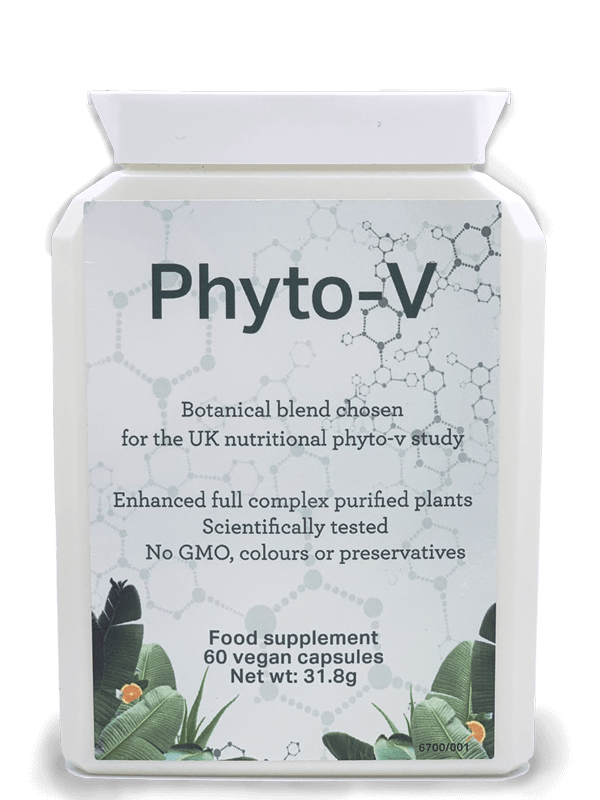
A double-blind, RCT evaluated a concentrated phytochemical-rich nutritional capsule (Phyto-V) in addition to the probiotic capsule on clinical outcomes among individuals with COVID.

Background:
Gut microflora dysbiosis affects the majority of individuals after COVID-19, contributing to both gastro-intestinal (GI) and non-GI symptoms. Natural phytochemicals have reported anti-viral properties and favourably effect inflammatory and oxidative pathways, both important for tissue damage post-viral pneumonia.
 Methods:
This study involved 147 participants with symptomatic COVID-19, randomised to receive a placebo (P) or a phytochemical-rich concentrated food capsule (PC) in addition to a pre/probiotic lactobacillus capsule known as Yourgutplus+
Study committee: Prof R Thomas*, Dr J Aldous+, R Forsyth^, Prof A Chater#, Dr Yuuki Yanagisawa, Dr R Kumar, M Williams* (2022). Bedford & Addenbrooke’s Cambridge University NHS Trusts. Department of English, Cambridge University. Sports and Nutrion department University of Bedfordshire.
EudraCT: 2020-001532-10 | IRAS: 282517
Results:
Participants taking the PC had an almost two-fold reduction in mean fatigue scores compared to placebo [p=0.02], a three-fold reduction in cough score and more than a double improvement in overall well-being scores [p=0.02].
Two (1.5%) participants reported mild, increased bloating which they felt was attributable to the capsules, although GI symptoms improved in 25 of 31 participants (82%) who reported them at baseline. Sedentary, older, previously hospitalised men with GI symptoms had a statistically significantly improvement among those given the probiotic.
Conclusions:
Such a rapid improvement observed in the majority of participants, who had been suffering for an average of 108 days, was clinically relevant and welcomed, especially among those more likely to have pre-existing gut dysbiosis.
The research team are now evaluating whether this blend could also enhance antibody titres post-COVID-19 vaccination.
(Read full paper)
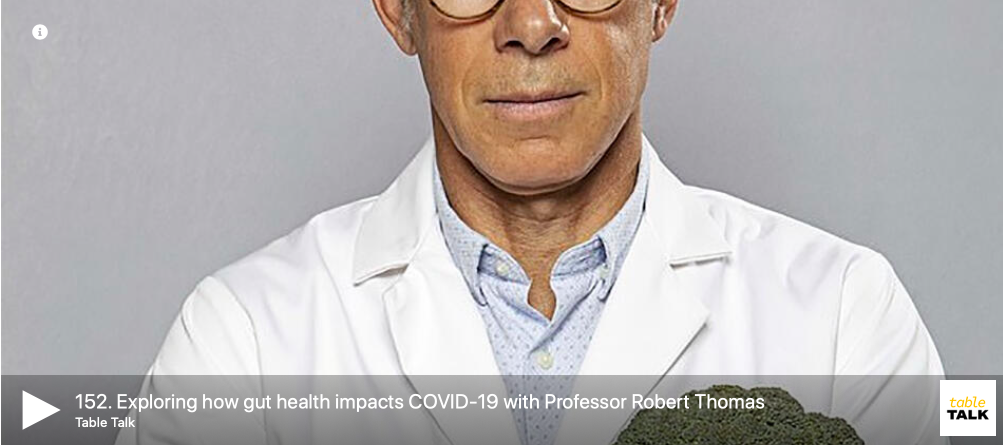
Listen to a podcast with Professor Thomas discussing the rationale and results of the study: